The nice list certificate on this site takes a first name and a reason, and prints on plain paper in about a minute. It runs in your browser, costs nothing, and stores nothing you type. The rest of this page is the part the printer cannot do for you: when to give it, and what to write on it.
Here is the short version of what to write on a nice list certificate: pick the printed reason that is closest to true, then add one handwritten line underneath about something specific the child actually did this year, in words they would recognize. Give it early in December, or leave it by the stockings on Christmas Eve, and never make it something they have to earn this week.
When is the right time to give it?
There are three good moments, and each one does a different job.
The first week of December. It arrives in the mail, or on the breakfast table, as good news at the start of the month. It sets a warm tone for the weeks after, and a child gets to carry it around and show people. This is the version most families pick.
Christmas Eve, beside the stockings. Here it is part of the ritual rather than the run-up. It works well in a house where the evening already has a shape, cookies out, a story, a certain order to things, and the certificate slots in as the last piece before bed.
Christmas morning, among the presents. Lovely, but it has to compete with things that make noise. If you choose this, put it on top of the stocking so it is seen first.
The one timing to avoid is the conditional one. “If you are good this week you will get your certificate” turns a joke into a threat, and this site will not help anybody do that. Researchers Setoh, Low, Heyman and Lee, reviewing what they call parenting by lying in Current Directions in Psychological Science in 2024, separate shared fantasy figures from false threats and promises used to control a child’s behavior. The second category is the one with the worrying correlates, although those links are correlational. The certificate should always be a verdict already in, delivered as good news, for a year that has already happened.
What should the certificate actually say?
The printed certificate offers six reasons: being kind to others, trying hard at school, helping at home, being a wonderful big sister, being a wonderful big brother, and a great year all round. Choose the one that is closest to the truth. Then pick up a pen.
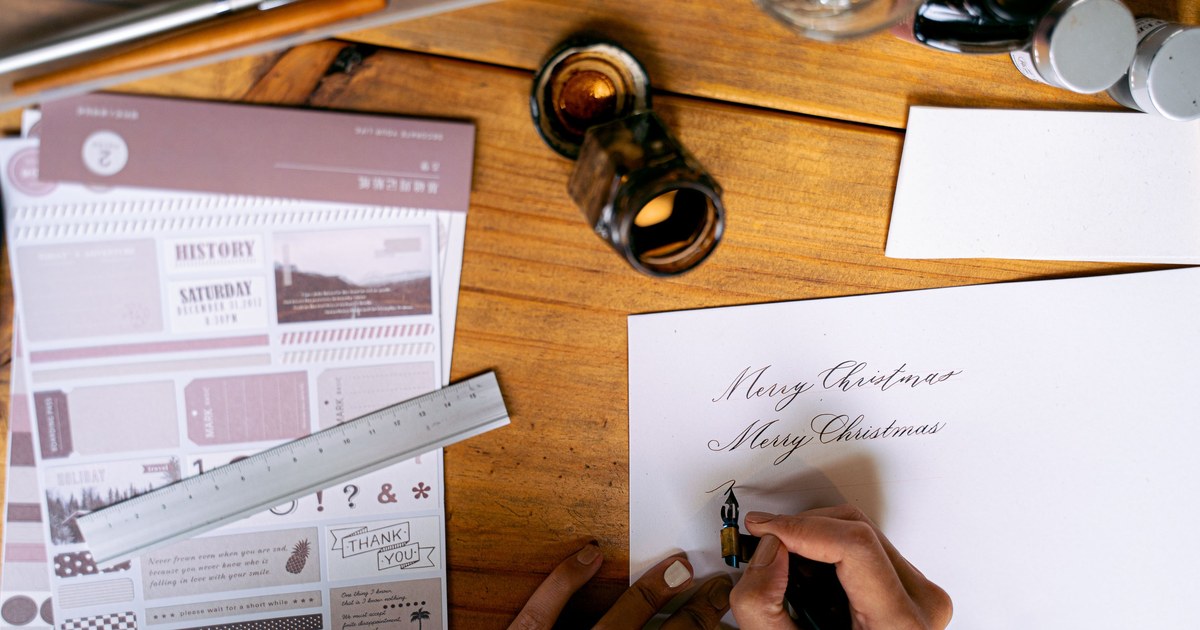
The handwritten line is what a child will remember, and it works best when it names one real thing. Some examples, all of them the kind of thing that happens in an ordinary year:
- “For letting your cousin have the window seat all the way to Grandma’s.”
- “For feeding the cat every morning in October without being asked.”
- “For teaching your little cousin the card game, twice.”
- “For the card you made Mrs. Patel when she was ill.”
- “For practicing the recorder, even the note that squeaks.”
Notice what those have in common. They describe something the child did, not something the child is. That is a choice, and there is some research behind it.
Why praise the thing they did rather than who they are?
The best known work here is a 1998 paper by Claudia Mueller and Carol Dweck in the Journal of Personality and Social Psychology. Across six studies with fifth graders, children praised for being clever after a puzzle task, compared with children praised for their effort, went on to show less persistence and less enjoyment after a later failure, and were more likely to describe intelligence as fixed. A longer-running study by Gunderson and colleagues, published in Developmental Psychology in 2018, observed 53 families at home when their children were one to three years old, and found that the share of praise aimed at effort and strategy predicted the children’s beliefs about ability, and through those beliefs their math and reading scores in fourth grade.
Both come with limits worth saying out loud. The 1998 studies were short lab tasks, not family life. The 2018 study is correlational, with a small sample, so it cannot show that the praise caused anything. And when Sisk and colleagues pooled the wider mindset research in two meta-analyses in Psychological Science in 2018, they found the overall links with academic achievement were weak. So nobody should claim a sentence on a Christmas certificate will change a child’s grades.
Our own view, and it is only ours: specific beats general anyway, for the simple reason that it is more believable. “For being the best girl in the world” is a nice thing to read once. “For feeding the cat in October” is proof somebody was paying attention, and that is the part that lands.
What do you write for a child who has had a hard year?
Something true and small. This is where the certificate earns its keep.
A year with a new school, a new baby, an illness or a family change is often a year when a child’s behavior was, to put it gently, loud. The certificate is not a report card, and it is not the place to balance the books. Choose “trying hard at school” or “a great year all round” and write about the smallest real thing you can find: the morning they got themselves dressed, the day they said sorry first, the evening they read to the dog.
If nothing specific comes to mind, “for getting through a big year” is honest and generous at the same time. Children in hard years tend to know they have been difficult. Being told that someone noticed them trying is the whole gift.
What if there are two children and only one had a good week?
Print two. Both children get a certificate, on the same day, in the same format, with different handwritten lines. The certificate covers the year, not the week, and it is a celebration, not a ranking.
The temptation, in a house where one child has been an angel since Thanksgiving and the other has been a weather system, is to let the certificate reflect that. Resist it. A child who watches a sibling get one and does not is not going to take a lesson in behavior from it. They are going to take a lesson in who is loved more, which is not a lesson anyone intends to teach.
Different lines are fine, and they should be different. “For looking after your little brother at the park” and “for learning to ride your bike with no hands, which we did not ask for” are two certificates for two children, and neither is the better one.
Does it matter what it is printed on?
A little. Plain printer paper works, and the page is set up so only the certificate prints, not the rest of the website. Thin card from a craft drawer makes it feel like a document. Sign it in ink as whoever you like; the printed version already has a line for the Head Elf.
It is worth being clear, since this is the one place it could matter: the certificate is make-believe. It is not a record of anything and nobody keeps a copy, which a child who asks can be told plainly. If you want the story behind why Santa keeps a list at all, the history of the naughty or nice list traces it to a 1934 song and an 1821 picture book. And if the certificate is going out at the end of a family evening, pen and paper Christmas games has a Household Nice List round that makes a good warm-up.
For the night itself, there is Xmas Naughty Or Nice Scanner. Aim the phone at someone and it puts their face in a striped candy-cane frame, runs a sweep of light and reads out a made-up verdict on a ribbon, so the certificate on the table gets a spoken second opinion in front of the whole family. Nothing about anyone is examined, which is the joke. It is a small one-time purchase on iPhone.
Sources
- Mueller CM, Dweck CS. Praise for intelligence can undermine children's motivation and performance. Journal of Personality and Social Psychology, 1998, 75(1), 33-52
- Gunderson EA, Sorhagen NS, Gripshover SJ, Dweck CS, Goldin-Meadow S, Levine SC. Parent praise to toddlers predicts fourth grade academic achievement via children's incremental mindsets. Developmental Psychology, 2018, 54(3), 397-409
- Sisk VF, Burgoyne AP, Sun J, Butler JL, Macnamara BN. To What Extent and Under Which Circumstances Are Growth Mind-Sets Important to Academic Achievement? Two Meta-Analyses. Psychological Science, 2018, 29(4), 549-571
- Setoh P, Low PHX, Heyman GD, Lee K. Parenting by Lying. Current Directions in Psychological Science, 2024, 33(1), 51-57